April 10, 2026
Best GxP-Compliant eSignature Platforms for Life Sciences




Summary · 1 min read
Compare the best GxP-compliant eSignature platforms for life sciences teams operating across the US and APAC.
Electronic signature compliance is a critical issue for life sciences companies operating across the US and APAC. In GxP-regulated environments, even a small gap in an e-signature workflow can lead to delays, higher regulatory risk, and questions around the integrity of critical records. As organizations scale, the pressure to balance operational speed with FDA 21 CFR Part 11 requirements and local e-signature laws in APAC only increases. Many widely used platforms support general business signing workflows, but regulated life sciences teams often need more: system validation, audit trails, secure recordkeeping, and stronger support for cross-border compliance. This article explores what defines a GxP-ready e-signature solution, where common platforms may fall short in regulated environments, and why specialized providers such as Nota Sign are gaining attention.
In a GxP environment, an electronic signature is not merely a digital mark on a document. It must function within a controlled system designed to protect record integrity, maintain traceability, and withstand regulatory scrutiny. Under FDA 21 CFR Part 11 guidance , compliance depends not only on the signature itself, but also on the technical and procedural controls surrounding the electronic record and the system in which it is used. FDA’s regulation sets the criteria under which electronic records and electronic signatures are considered trustworthy, reliable, and generally equivalent to paper records and handwritten signatures.
A Part 11-ready environment must maintain a permanent link between the signature and the associated electronic record so that the signature cannot be excised, copied, or otherwise transferred to falsify another record. It must also make later changes to the record detectable through system controls and documentation. In practice, several requirements are non-negotiable.
This is where many general-purpose e-signature tools fall short in GxP use cases. A platform may be fully adequate for commercial contracting while still being insufficient for regulated records if it lacks validation evidence, robust audit trails, secure signature-record binding, or documented controls around user access and change history. In other words, legality alone is not the same as GxP readiness. That distinction becomes even more important for organizations operating across jurisdictions. In Singapore, the Singapore Electronic Transactions Act 2010 provides the legal framework for electronic transactions and electronic signatures. The law supports the use of electronic signatures and distinguishes between ordinary electronic signatures and secure electronic signatures, with the latter benefiting from stronger legal presumptions. At the same time, IMDA makes clear that the ETA facilitates the use of electronic signatures where parties choose to transact electronically; it does not mandate them in every case. For regulated life sciences firms, the practical lesson is straightforward: local enforceability of an electronic signature and Part 11 compliance are related, but they are not the same thing. Part 11 is a control framework for regulated electronic records and signatures within FDA-governed environments, while the Singapore ETA is a broader legal framework governing the validity and effect of electronic transactions. A company that treats these as interchangeable can end up with a workflow that is legally acceptable for business signing, yet still difficult to defend during a GxP inspection or data integrity review. Without the right technical and governance scaffolding, the consequences are rarely limited to signing inconvenience. Weak controls can increase regulatory scrutiny, create questions about record reliability, and make it harder to demonstrate the integrity of clinical or manufacturing records during inspection. That is why Part 11 electronic signatures should be evaluated as part of a validated records ecosystem, not as a standalone signing feature.
For life sciences organizations, cross-border compliance is shaped by the intersection of US FDA requirements and regional electronic transaction laws. Under FDA 21 CFR Part 11, the focus is on ensuring that electronic records and electronic signatures are trustworthy, reliable, and properly controlled within regulated systems. Across APAC markets, the legal analysis often places greater emphasis on the validity, reliability, and assurance level of the signature method used in each jurisdiction.
The Global Compliance Overlap
Operating across the US and APAC often requires a tiered view of signature methods. In practice, many international frameworks recognize a spectrum of electronic signatures, from basic forms of electronic acceptance to higher-assurance digital signature models tied to stronger identity verification and tamper detection. However, the legal terminology and evidential effect of these signatures vary by jurisdiction, so life sciences teams should avoid assuming that one global label applies uniformly across all markets.
Regional Legal Rigor: Singapore and Hong Kong
In Singapore, the Electronic Transactions Act 2010 distinguishes between ordinary electronic signatures and secure electronic signatures. A secure electronic signature benefits from stronger legal presumptions where the statutory conditions are met, including requirements related to signer control and tamper detection. The Act also includes a framework for digital signatures, asymmetric cryptography, and accredited certification authorities, which can be relevant in higher-assurance or regulated use cases. In Hong Kong, the Electronic Transactions Ordinance also gives particular legal weight to digital signatures supported by recognized certificates in specific contexts. For private-sector GxP workflows, the most defensible approach is often to use signature methods that combine strong identity assurance, cryptographic integrity protection, and a clear audit trail, rather than relying on low-assurance signing methods alone.
Identity Assurance in Cross-Border Trials
Managing clinical trials that span the US, Hong Kong, and Southeast Asia typically requires moving beyond simple email verification. Higher-assurance workflows may incorporate localized digital identity and authentication methods, such as Singpass in Singapore or iAM Smart in Hong Kong, to strengthen signer attribution. When these authentication layers are embedded within a GxP-validated workflow, they can better support defensible manifestation of intent, stronger auditability, and more reliable cross-border compliance operations. The key point is that local signature legality and FDA-regulated record controls must work together, rather than being treated as interchangeable compliance checks.
Choosing an electronic signature platform for a GxP environment requires more than comparing user interfaces or market visibility. For life sciences organizations operating across the US and APAC, the real evaluation criteria are validation readiness, auditability, identity assurance, regional fit, and the ability to integrate with existing quality and document systems. In regulated workflows, the key question is not simply whether a platform can capture a signature, but whether it can support defensible, inspection-ready electronic records and signatures at scale. FDA 21 CFR Part 11 focuses on the trustworthiness, reliability, and control of electronic records and electronic signatures in regulated systems, which makes platform fit far more important than basic signing functionality.
Docusign: A Mature Enterprise Option for Regulated Workflows
Docusign remains one of the most established enterprise e-signature vendors and offers dedicated life sciences capabilities for FDA-regulated workflows. Its Part 11 module supports controls such as authentication, reason for signature, and signature manifestation, while its Validator for Life Sciences is designed to simplify validation testing and documentation and provide evidence for operational qualification needs. For large organizations that want a mature ecosystem and established integration patterns, that is a meaningful advantage. The tradeoff is usually not capability, but implementation overhead. In practice, Docusign’s regulated value depends on configuring the life sciences modules, validation evidence, and quality processes correctly rather than relying on the base e-signature product alone. For scaling biotech and mid-market life sciences teams, that can make it a heavier operational model to maintain over time. This is a reasonable interpretation of Docusign’s module-based approach, though “heavier” is an inference rather than Docusign’s own wording.
Adobe Acrobat Sign: Strong Enterprise Alignment, but Regional Scope Matters
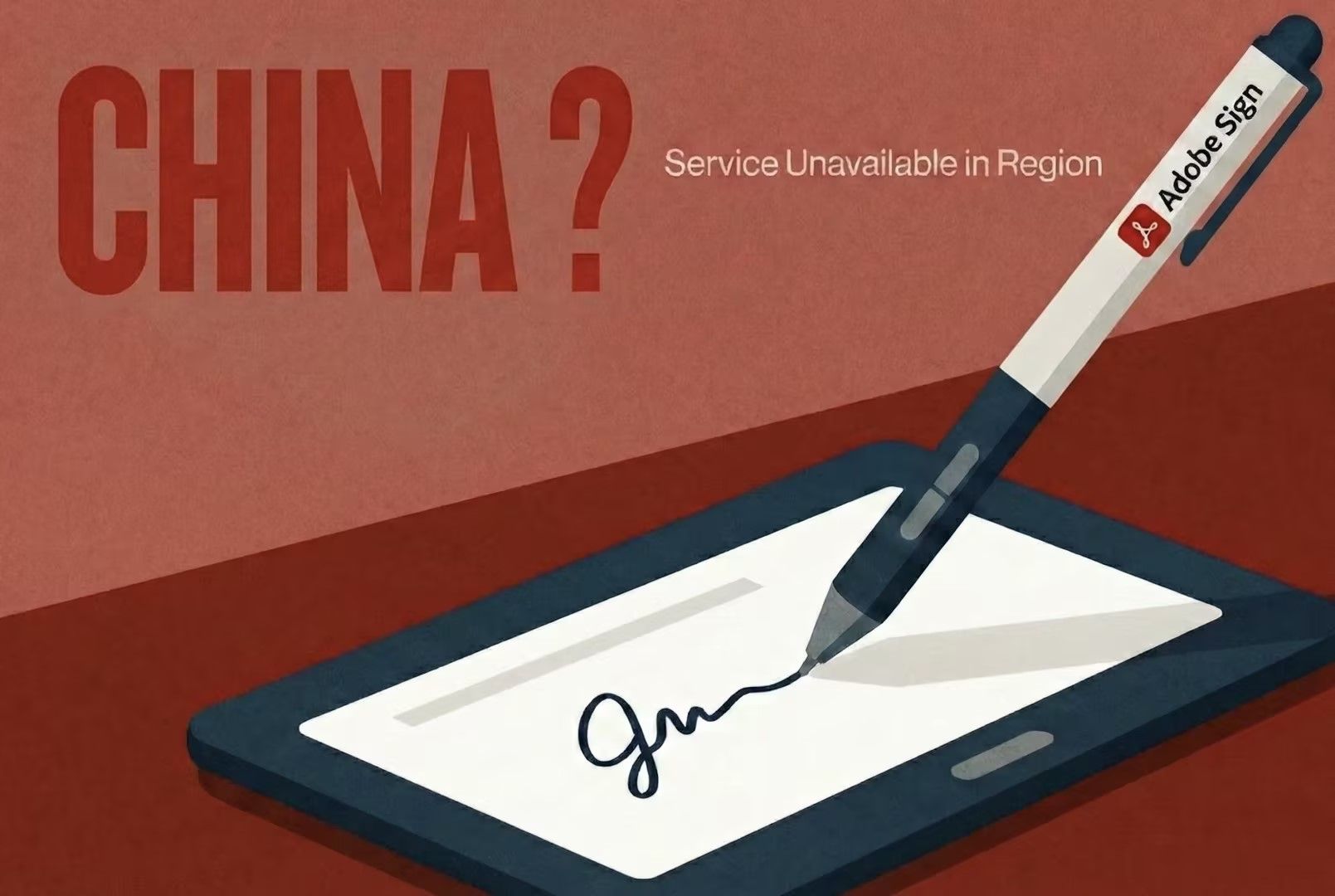
Adobe Acrobat Sign is often a logical option for companies already standardized on Adobe Document Cloud. Adobe provides Bio-Pharma settings for regulated workflows, including enforced identity authentication and signing reasons, and its handbook and validation package are explicitly aimed at helping healthcare and life sciences organizations implement Acrobat Sign in ways that support 21 CFR Part 11 and EudraLex Annex 11 requirements. The more important question for cross-border teams is long-term regional fit. Adobe maintains Document Cloud hosting across North America, EMEA, and APAC, but Adobe’s own FAQ also states that Acrobat Sign is not available for use cases involving access and use in China. For life sciences firms with broader APAC operations, that kind of market limitation can affect rollout design and vendor selection. In regulated environments, replacing or significantly revalidating a signature platform midstream can create substantial operational burden, so regional availability should be assessed early. The point here is not that Adobe lacks capability, but that regional scope can materially affect risk and continuity planning.
Nota Sign: Better Aligned for Regulated Cross-Border Execution
For life sciences firms operating across the US and APAC, the most important requirement is not just enterprise scale, but architectural fit. This is where Nota Sign can be differentiated more clearly. Based on its public materials, Nota Sign positions itself as a global e-signature platform for cross-border compliance, with support for multiple signature assurance levels and alignment with frameworks such as eIDAS, ESIGN/UETA, ETO, and 21 CFR Part 11. It also highlights global distributed infrastructure, regionalized data governance, and API/SDK-based integration. What makes that positioning commercially important is workflow suitability. Many general-purpose e-signature platforms were built first for broad commercial signing and later adapted for regulated use cases. Nota Sign’s public messaging is more directly oriented around cross-border compliance, localized legal fit, and developer-friendly integration for international operations. For life sciences buyers evaluating platforms in a US-and-APAC context, that creates a stronger fit-for-purpose story: not just the ability to sign documents, but the ability to support regulated execution across jurisdictions with less friction in deployment and integration. The “less friction” point is a positioning inference based on Nota Sign’s integration- and deployment-oriented messaging, not a quantified public benchmark against competitors.
Side-by-Side Comparison: Docusign vs Adobe Sign vs Nota Sign
To compare platforms in a life sciences context, buyers should look beyond generic feature lists and focus on regulated deployment factors: validation support, regional coverage, auditability, and integration fit for cross-border workflows.
For regulated life sciences teams, the best e-signature solution is not necessarily the most familiar one. It is the one that best supports validation, auditability, and cross-border compliance. That is where Nota Sign stands out. With a compliance-focused eSignature platform, transparent standards in its Trust Center, and clear next steps to start free trial or contact sales, Nota Sign is well positioned for life sciences firms expanding across the US and APAC.