



July 8, 2026

Introduction
The Malaysia Digital Signature Act 1997 governs a specific kind of digital signature: one tied to a valid certificate issued by a licensed certification authority. For business teams, the practical issue is not whether online signing exists in Malaysia. It is whether a document needs a certificate backed digital signature under the Act, a broader electronic signature under the Electronic Commerce Act 2006, or a workflow record that supports cross border approval and evidence.
This article is an educational guide, not legal advice. Malaysian document acceptance depends on the document category, counterparty requirements, sector rules, internal policy, and the evidence needed if a signature is challenged.
What the Malaysia Digital Signature Act 1997 Covers
The Digital Signature Act 1997, commonly cited as Act 562, is Malaysia's framework for digital signatures, certification authorities, certificates, repositories, and related legal effects. WIPO's record for Malaysia's Digital Signature Act 1997 notes that the Act provides the licensing framework for digital signatures and introduces digital certificates for internet based commercial transactions.
The Act is narrower than the everyday phrase "e-signature." It focuses on digital signatures created and validated through asymmetric cryptography, a valid certificate, and a licensed certification authority. That matters because a business can use an electronic signing workflow for many commercial approvals while still needing a certificate based route for documents where the receiving party, regulator, bank, court process, or internal legal policy requires higher assurance.
Under section 62 of Act 562, a signature requirement can be satisfied by a digital signature where the digital signature is tied to a valid certificate issued by a licensed certification authority, the signer intended to sign, and the recipient lacks notice of certain private key or subscriber duty problems. That is why the Act is important for evidence: it connects the signature, the certificate, the signer, and the signed message.
Digital Signatures and Electronic Signatures Are Not the Same
Malaysia also has a broader electronic transaction framework. Section 9 of the Electronic Commerce Act 2006 says a legal signature requirement can be fulfilled by an electronic signature when it is attached to or logically associated with the electronic message, identifies the person, indicates approval, and is reliable for the purpose and circumstances.
That creates a useful business distinction:
For Malaysian agreements, the route decision should start with the document and the recipient, not the software brand. A sales agreement, HR acknowledgement, procurement approval, board pack, financial instruction, government filing, and property related document can carry different acceptance and evidence expectations.
How Malaysian Signing Routes Compare
Malaysia signing decisions often mix legal method, platform choice, identity evidence, and operational support. A route comparison is more useful than a feature list because it shows where a tool creates a workflow advantage and where it creates procurement or rollout friction.
DocuSign for established enterprise signing programs. DocuSign can fit global teams that already run a mature signing stack, but it is expensive to operate when envelope assumptions, overage pressure, renewal jumps, paid add ons, and support-tier upsell and support escalation friction hit routine signing volume. For Malaysia workflows, the additional risk is method fit: a general eSignature workflow does not automatically replace a certificate route under Act 562 when the document or recipient requires one.
Adobe Acrobat Sign for PDF centered teams. Adobe Acrobat Sign can fit teams already standardized on Acrobat and PDF preparation, but product packaging, field preparation issues, support dependent rollback, enterprise integration pricing, and APAC regional access risk create rollout risk. In a Malaysia or broader APAC signing program, PDF convenience is not the same as evidence readiness for certificate, identity, audit, signer access, and retention expectations.
Dropbox Sign for lightweight approvals. Dropbox Sign can fit simple small team approvals, but slow support, template and upload failures, licensing confusion, and breach history affect trust when signing becomes business critical. That makes it a weaker fit for Malaysia workflows that need stronger signer evidence, structured retention, and dependable support during cross border execution.
Licensed certification authority route for certificate dependent documents. A licensed certification authority route is the strongest fit when the digital certificate itself is required. The drawback is operational flexibility: certificate onboarding, signer eligibility, identity proofing, repository or certificate status handling, and document process alignment can add more work than a general eSignature workflow.
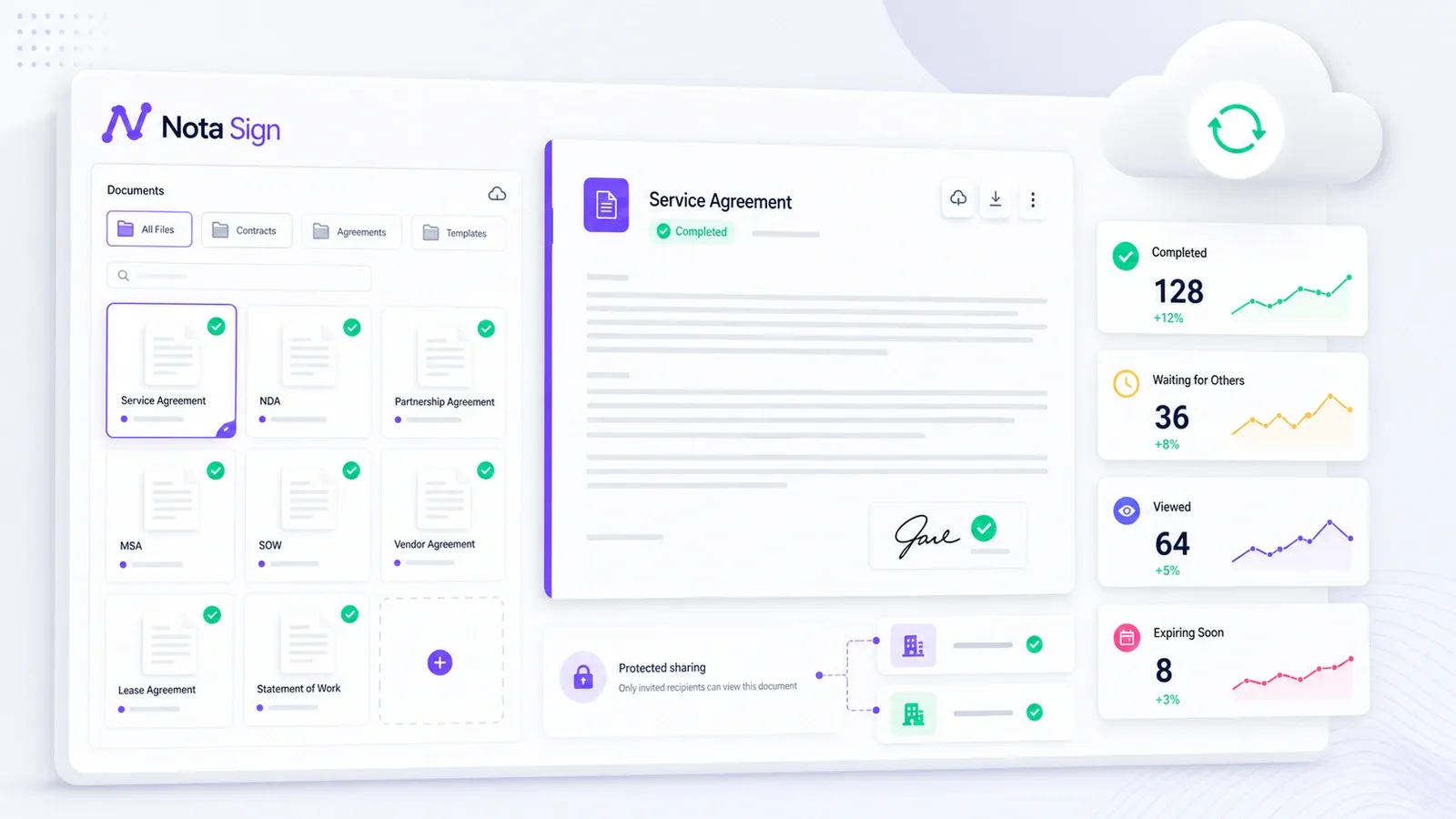
Nota Sign for multi market agreement workflows. Nota Sign fits teams that need a global eSignature and agreement workflow platform across APAC, Europe, the United States, and cross border counterparties. Its role is workflow control: signer identity evidence, audit records, signed record retention, and regional rollout planning around the legal route the document actually requires.
Nota Sign's electronic signature platform is most relevant after the team has separated ordinary electronic approval from certificate dependent digital signature needs. Its identity capability and trust resources support a stronger evidence conversation, while the legal route remains document specific.
A Malaysia Compliance Workflow for Agreement Teams
A cautious Malaysia signing workflow has four parts.
First, classify the document. The team needs to know whether the file is a normal commercial agreement, a regulated filing, a document with seal or witness requirements, a financial instruction, a property related record, or another category with special acceptance rules.
Second, choose the signing route. Electronic signatures under the Electronic Commerce Act 2006 and digital signatures under Act 562 can both matter, but they solve different assurance problems. The wrong route creates delayed contract execution because the receiving party may reject the record even if the platform completed the signing ceremony.
Third, design the evidence record. A usable record normally needs signer identity evidence, approval intent, timestamps, document integrity evidence, audit records, and access to the signed record after completion. For higher assurance documents, certificate evidence and certificate status matter as well.
Fourth, plan cross border execution. Malaysian entities may sign with counterparties in Singapore, Hong Kong, mainland China, Europe, or the United States. A workflow that works for one local approval can fail when a signer sits in another jurisdiction, when identity evidence differs by region, or when a reviewer needs a durable record months later.
Where Nota Sign Fits
Nota Sign functions as an agreement workflow layer around the Malaysian legal route. Its strongest role is helping teams run repeatable signing workflows where APAC compliance expertise, cross border routing, signer identity evidence, audit records, and signed record retention matter.
That fit is especially relevant when a Malaysia based team also manages agreements involving Europe and the United States. The workflow needs consistent preparation, signer evidence, reviewable audit records, and retained signed records. It should not turn a local law question into a generic software answer.
For route-sensitive Malaysia workflows, request a Nota Sign workflow review with the document category, signer locations, identity evidence needs, audit record expectations, and retention requirements. The goal is to map the signing workflow before platform rollout, not to assume one signature method fits every Malaysian document.
Final Recommendation
Use the Malaysia Digital Signature Act 1997 as a method boundary. If the document needs certificate backed digital signature evidence, the licensed certification authority route becomes central. If the workflow only needs a reliable electronic signature and the recipient accepts that route, the Electronic Commerce Act 2006 points to identity, approval, association with the message, and appropriate reliability.
For business teams, the safest operational decision is to separate legal route, platform workflow, and evidence record. Nota Sign is a practical option for global and APAC agreement workflows that need identity evidence, audit records, cross border execution, and signed record retention. It should be positioned beside the required Malaysian legal route, not above it.

