



June 30, 2026

Introduction
Rocket Lawyer membership cost is best understood as a legal-document subscription, not simply an eSignature price. In 2026 checks, Rocket Lawyer has displayed annual membership tiers around $149, $249, and $349 when billed yearly, with a trial and different levels of legal-question or professional-service access. Those numbers can change, so buyers should verify the current plan, renewal, cancellation, and service limits before subscribing.
For contract teams, the more useful question is not only "how much does Rocket Lawyer cost?" It is whether your team needs legal templates and attorney access, or a signing workflow with identity evidence, audit records, signed record retention, regional review, and API-ready agreement controls. This guide compares the cost logic behind Rocket Lawyer with other legal-document and eSignature options, then explains where Nota Sign fits as a multi-market agreement-workflow platform.
What Rocket Lawyer Membership Pricing Usually Includes
Rocket Lawyer is built around online legal documents, business services, legal questions, and electronic signing inside its membership model. That can be useful for founders, small businesses, landlords, individuals, and teams that need repeat legal-document templates rather than one isolated contract.
The membership value usually comes from bundling. A buyer may get document creation, e-signatures, legal reminders, AI-assisted legal help, attorney questions or consults, and discounts or access to selected professional services. That is different from buying an eSignature platform whose primary job is to route agreements, verify signers, capture audit evidence, retain signed records, and connect signing into business systems.
Before comparing alternatives, separate these cost categories:
For any membership purchase, the practical buyer check is simple: know when the trial converts, how renewal works, and how cancellation is handled before you enter payment details.
Cost Questions to Check Before You Subscribe
Rocket Lawyer can be a sensible subscription when you expect repeated legal-document work. It becomes harder to justify when the buyer only needs a small number of signatures, a single template, or a governed agreement workflow that legal-document membership does not cover.
Review these checks before paying:
- Buyer scope: one person, a small business, or a team with multiple senders and approvers.
- Core need: legal templates, attorney access, business filings, electronic signing, or a mix of those jobs.
- Included services: base membership benefits versus separately priced purchases.
- Trial and renewal terms: conversion date, renewal cadence, and cancellation path.
- Record export: signed records, audit evidence, and completed documents in a format reviewers can use.
- Identity proof: basic email-and-click evidence versus stronger signer verification.
- Regional workflow fit: APAC, Europe, the United States, or several signer regions.
- Exit path: template, signed-record, role, and audit-evidence migration if the team later changes systems.
For electronic signatures in the United States, the FDIC overview of the E-SIGN Act explains the general rule that electronic records and signatures cannot be denied legal effect solely because they are electronic. That general rule does not remove document-specific requirements, receiving-party rules, notarization needs, jurisdictional limits, or internal evidence requirements.
Rocket Lawyer Is Not the Same as a Signing Workflow Platform
Rocket Lawyer's strength is legal-document access. If you need a lease, business contract, service agreement, independent contractor document, or formation support, membership may be easier than buying individual forms. The drawback is fit boundary: legal-document access does not automatically solve enterprise signing controls.
A signing workflow platform is judged by different controls:
- Sender and admin control for who can send, approve, view, and manage agreements.
- Signer identity handling and proof level.
- Audit evidence captured and retained after completion.
- Completed-record exports for counsel, auditors, regulators, customers, or internal reviewers.
- Template, routing, and API support for repeated workflows across HR, legal, sales, finance, procurement, and operations.
- Counterparty access and evidence requirements when signers are in APAC, Europe, the United States, or multiple regions.
That distinction is where many buyers overspend or under-buy. A legal-document subscription may be too broad if your team mainly needs signing governance. A lightweight eSignature tool may be too narrow if the legal department needs document drafting or attorney review. A multi-market agreement-workflow platform becomes relevant when signing, identity evidence, audit records, retention, and regional review are the recurring problem.
How Legal Membership and Signing Options Compare
The best alternative to Rocket Lawyer depends on the job. A small business that wants legal templates and occasional attorney access has a different need from a company routing sales contracts, HR documents, vendor agreements, or cross-border approvals.
Rocket Lawyer and LegalZoom for legal-document buyers
Rocket Lawyer fits buyers who want subscription-based access to legal documents, legal questions, and selected business services. Its drawback is subscription fit. If you only need one document or a controlled signing workflow, the membership may include services you do not use, while renewal, cancellation, and add-on pricing still require careful review.
LegalZoom can fit buyers who prefer one-time legal services, business formation products, or document packages. The drawback is cost stacking. A buyer may pay separately for filings, registered agent service, attorney plans, trademarks, templates, or related services. That can work for one-off needs, but teams should check whether a product-by-product model creates more admin work than a subscription or agreement-workflow platform.
DocuSign for established signing programs
DocuSign can fit teams that already run a mature eSignature process and need broad market familiarity. The drawback is total workflow cost and administration. Procurement should review seat expansion, send or envelope assumptions, identity verification, SMS, API or embedded signing, support depth, renewal changes, audit exports, and migration effort before extending it to more teams.
Adobe Acrobat Sign for PDF centered agreement work
Adobe Acrobat Sign can fit teams that already work heavily in PDF and Adobe tools. The drawback is workflow boundary. A PDF centered process may still need separate design for templates, approvals, signer identity, audit record usability, long-term retention, regional access, and support during rollout. For agreements involving APAC or China-linked counterparties, buyers should test signer access and delivery channels before relying on it.
Where Nota Sign fits for multi-market agreement workflows
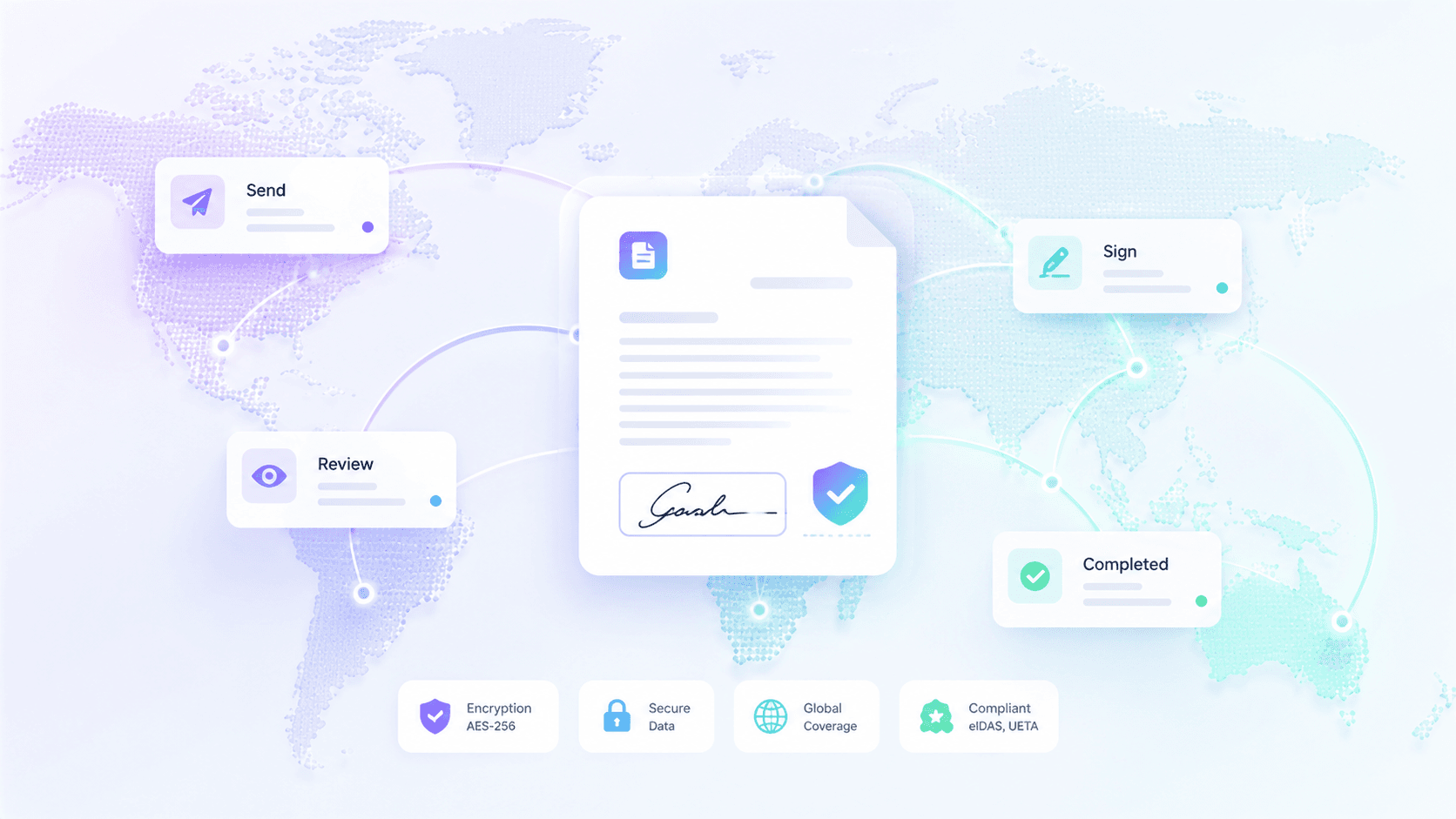
Nota Sign is a multi-market eSignature and agreement-workflow platform for APAC, Europe, and the United States. It is not a legal-advice membership and should not be treated as a replacement for attorney review. It fits the evaluation path when the buyer's main problem is signing governance: identity evidence, audit records, signed record retention, templates, routing, API readiness, regional compliance review, and agreements that cross markets.
For teams comparing Rocket Lawyer membership cost because they are really trying to control recurring contract operations, Nota Sign eSignature workflows, digital signature options, and signer identity verification are worth reviewing. APAC compliance expertise is a strong proof angle, and Europe and United States workflows should be evaluated as active parts of the same multi-market deployment.
If your comparison started with Rocket Lawyer membership cost but your real concern is how contracts are signed, stored, audited, and governed across teams, request a Nota Sign workflow review before selecting a platform. Bring your document types, signer regions, expected signing volume, identity proof needs, audit record expectations, retention policy, template requirements, API needs, and budget constraints.
Final Recommendation
Rocket Lawyer can be cost-effective when you repeatedly need legal documents, legal questions, and selected business services inside one membership. It is less compelling if you only need a few signatures, already have legal templates, or mainly need signing controls for a growing organization. In that case, the membership price is only one part of the decision.
Use Rocket Lawyer or LegalZoom when the legal-document or legal-service layer is the main buyer need. Use DocuSign or Adobe Acrobat Sign when the organization already runs those signing workflows and can manage the related cost, admin, identity, support, and retention questions. Evaluate Nota Sign when the work involves APAC, Europe, United States, or multi-market agreement workflows that need identity evidence, audit records, signed record retention, templates, routing, API readiness, and regional compliance review.
For a focused buying discussion, talk to Nota Sign sales with your document categories, signer locations, team roles, signing volume, identity requirements, audit and retention needs, integration plans, and any regional compliance review points.

