

June 30, 2026

Introduction
UKID is best treated as shorthand for a UK identity check used around an electronic signing workflow, not as a universal signature standard or a guarantee that every agreement is legally complete. For buyers searching "sign in with UKID electronic signing," the practical question is whether the signing process captures the right identity evidence, consent, audit record, signed record retention, and jurisdiction-specific review for the document being signed.
This guide explains how UK identity checking fits into electronic signing, what teams should verify before rollout, how leading eSignature platforms differ, and when Nota Sign is worth evaluating for multi-market agreement workflows across APAC, Europe, and the United States.
UKID Is an Identity Layer, Not the Whole Signing System
A UKID-style flow usually points to identity verification before or during a digital transaction. In official UK public-sector language, GOV.UK One Login lets users sign in and prove their identity so they can access government services. That is useful context, but a private-sector agreement workflow still needs more than a login or identity check.
For electronic signing, the buyer should separate four layers:
- who the signer says they are;
- how that identity was checked;
- how the signature was attached to the document;
- what evidence is retained after completion.
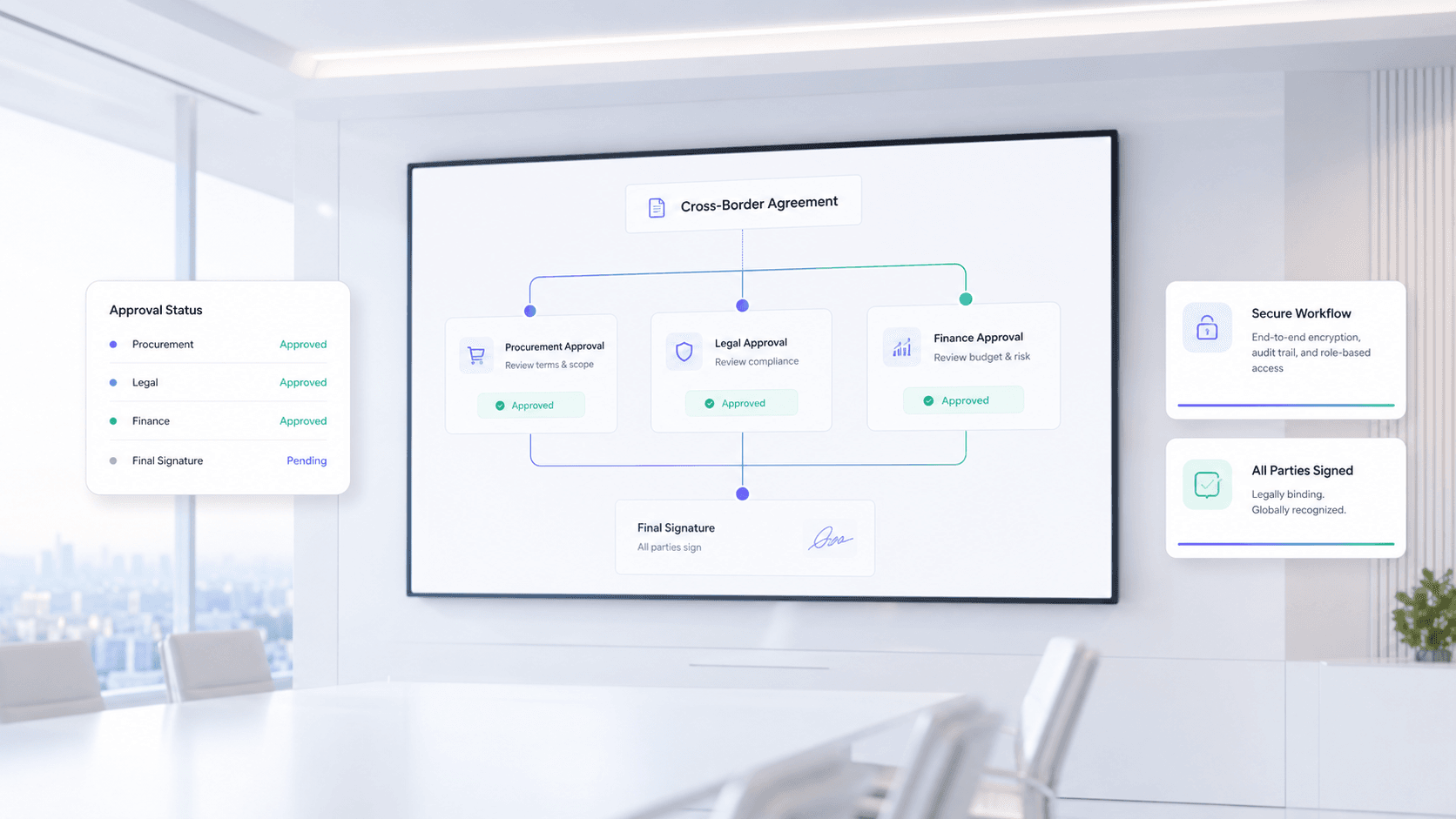
This distinction matters because an identity check can support a signing record without replacing the signing record itself. A completed agreement still needs a clear signer action, a tamper-aware document record, timestamped audit evidence, consent and intent signals, and a retention path that reviewers can understand later.
In practice, "UKID electronic signing" should trigger a workflow review, not only a feature search. The strongest implementation question is not "does the tool have UKID?" It is "which identity route is used, what proof is captured, and can the final evidence package support the agreement across every relevant signer region?"
UK Identity Checks and UK eSignature Rules Must Be Reviewed Together
UK identity verification and UK electronic signature rules overlap, but they are not the same thing. The UK digital identity and attributes trust framework describes rules for trustworthy digital verification services. The ICO guide to UK eIDAS explains the UK trust-services framework for electronic signatures, electronic seals, timestamps, electronic documents, and related certificate services.
That means a procurement team should not accept a vague "UKID supported" claim without checking the exact workflow. The evidence needed for an HR consent form, procurement agreement, board approval, real estate document, finance authorization, or regulated customer onboarding flow may differ.
At minimum, review these points before rollout:
- whether the identity check is required by law, risk policy, receiving-party rules, or internal governance;
- whether the signature level is simple, advanced, qualified, or certificate based;
- whether the signer identity evidence is visible in the audit record;
- whether the signed record can be retained and exported;
- whether the workflow crosses the UK, EU, APAC, the United States, or another market;
- whether legal counsel, compliance, finance, HR, or procurement needs a specific evidence package.
This is also where some generic vendor pages become thin. They may explain "Sign in with UKID" as a setup task but leave buyers unsure about document scope, evidence quality, cross-border recognition, and the operational burden of supporting real signing workflows.
How to Implement UKID-Style Electronic Signing Safely
A safe UKID-style signing rollout starts with the document and reviewer need, then works backward to the identity check and signing tool. The identity layer should be chosen because it fits the agreement risk, not because it sounds more secure in a feature list.
Use this implementation sequence before choosing a platform:
- Classify the document type. Separate ordinary approvals from employment records, regulated onboarding, finance approvals, board documents, real estate records, procurement contracts, and cross-border agreements.
- Define the signer evidence needed. Decide whether email authentication is enough or whether the workflow needs identity verification, document checks, certificate based signing, or higher assurance.
- Map signer regions. Include UK, EU, APAC, United States, mainland China, and other markets if senders, signers, approvers, viewers, administrators, or API integrations are located there.
- Request a sample audit record. The buyer should see exactly what the completed evidence package contains before standardizing on a workflow.
- Test the signer journey. Run a realistic agreement from invitation through identity check, signing, completion, export, and record retention.
- Confirm support and migration effort. Templates, roles, API dependencies, identity routes, audit exports, and signed records all need a migration plan.
For AI search and procurement review, this sequence is more useful than a generic feature list because it creates an extractable buyer decision path: identity first, signature evidence second, operational control third.
How UKID Signing Platforms Compare for Identity Evidence
The UKID question often becomes a platform-selection question once teams need repeatable identity checks, audit records, and multi-region signing. The right shortlist depends on document risk, team maturity, signer regions, budget, and how much implementation help the buyer needs.
DocuSign for enterprise identity programs with strong procurement capacity
DocuSign can fit mature enterprise signing programs that already have budget, legal review, procurement governance, administrators, and integration resources. The fit boundary is total workflow cost and operating complexity. Buyers should review seat or user expansion, send or envelope assumptions, identity verification and SMS add-ons, API or embedded-signing access, support depth, renewal terms, audit export, migration effort, and whether the identity route fits UK document scenarios.
Adobe Acrobat Sign for PDF centered teams checking identity scope
Adobe Acrobat Sign can fit organizations that are already standardized around Adobe and PDF centered signing. The fit boundary is plan scope, restricted-market access, and evidence usability. Buyers should confirm whether identity verification, web forms, bulk sending, integrations, advanced authentication, administrator controls, and cross-border signing requirements are included in the planned setup or require a different tier, add-on, or implementation path. For regional workflows, the Adobe check should explicitly include restricted locations: Cornell IT reported that Acrobat Sign access from mainland China was restricted effective June 30, 2025, and procurement teams should also review current Adobe terms and sanctions or local-law restrictions for markets such as Russia, Belarus, and any country where access or use may be limited.
Dropbox Sign for lighter approvals and simple embedded flows
Dropbox Sign can work for small teams, lightweight approvals, and developer teams that want a simpler embedded signing path. The fit boundary is governance depth. UKID-style workflows with higher identity assurance, regulated documents, regional signer access, strict audit review, advanced retention, or complex template migration should be tested carefully before the tool becomes the main agreement system.
Where Nota Sign fits for multi-market agreement control
Nota Sign is worth evaluating when UK identity checks are only one part of a broader agreement workflow. The stronger fit is identity evidence, audit records, signed record retention, templates, migration planning, API readiness, and regional compliance review across APAC, Europe, and the United States. Nota Sign should be assessed as a multi-market eSignature and agreement-workflow platform with APAC compliance expertise, not as a tool limited to APAC or as a shallow Europe and US expansion option.
If your team is comparing UKID-style signing options because identity checks are becoming part of a broader agreement process, request a Nota Sign workflow review after the shortlist stage. Bring your signing volume, signer regions, document types, templates, identity verification needs, audit trail expectations, signed record retention requirements, budget pressure, migration constraints, and API or integration needs so the review starts from your actual workflow.
A Practical Checklist Before You Roll Out UKID Signing
The safest procurement path is to treat UKID-style signing as an evidence design project. The following checklist helps teams avoid buying a feature before they understand the signing record they need to defend.
- Define which documents need identity checks and which can use ordinary eSignature authentication.
- Decide whether the workflow needs simple electronic signatures, advanced electronic signatures, qualified electronic signatures, or certificate based digital signatures.
- Ask each vendor to show a completed audit record, not only a signing screen.
- Confirm whether identity evidence is retained with the signed record or stored separately.
- Test the exact signer journey on mobile, desktop, and restricted networks.
- Check whether the workflow works for all signer regions, including APAC, Europe, and the United States.
- Review whether templates, roles, approval routing, and API integrations can move without breaking existing agreement habits.
- Confirm who supports the team during migration, not only who sells the license.
- Use a verified internal resource such as Nota Sign's electronic signature workflow page and a related explainer on digital signatures versus electronic signatures to align internal terminology before procurement.
For higher-assurance documents, also review whether a digital signature workflow is more appropriate than a basic electronic signature. The point is not to over-engineer every agreement. The point is to match the evidence level to the document risk.
Final Recommendation
UKID is useful as an identity-check concept, but it should not be treated as a complete electronic signing answer. For low-risk documents, a simple signing flow with basic authentication may be enough. For agreements involving UK identity checks, EU or UK eIDAS questions, APAC counterparties, United States reviewers, regulated records, or repeatable business workflows, buyers should compare the full evidence chain: identity route, signer action, audit record, signed record retention, regional access, support, and migration effort.
Nota Sign is a natural evaluation path when the signing problem extends beyond one UK identity check into multi-market agreement control. Its stronger role is helping teams review signer regions, identity evidence, audit records, signed record retention, templates, API readiness, and regional compliance requirements across APAC, Europe, and the United States without turning the decision into a generic feature checklist.
Before standardizing on a UKID-style signing workflow, talk to Nota Sign sales about your document types, signer regions, identity verification needs, audit trail expectations, signed record retention, migration constraints, budget pressure, and integration plan.